Biopics are not documentaries, but they carry a burden of truth. They must illuminate the soul of their subject, not just mimic their silhouette. The recently released Michael Jackson movie does neither. It dresses up a cardboard cutout in rhinestones and calls it art. This isn't just a failure of storytelling — it's a betrayal of what a biopic should be: a reckoning with contradiction, a journey through myth and man, and a reflection of cultural impact. Instead, we get a sanitized, emotionally vacant parade of greatest hits and choreography, skipping over the very things that made Jackson both legendary and controversial.
What a Biopic Ought to Do — and Why This One Doesn’t
A successful biopic doesn’t need to be exhaustive, but it must feel true. Consider Ray, which didn’t shy from Ray Charles’ struggles with addiction, or Bohemian Rhapsody, which, despite its flaws, at least attempted to humanize Freddie Mercury in private moments. Even Walk the Line, with its romanticized arc, grounded Johnny Cash’s brilliance in pain and redemption.
The Michael Jackson movie avoids this depth entirely. It treats Jackson’s genius as a given, never probing how it was forged — the relentless pressure of childhood fame, the isolation, the physical and psychological toll of perfectionism. Worse, it sidesteps the elephant in the room: the allegations against him. A biopic that refuses to engage with the most contested part of its subject’s life isn’t brave — it’s cowardly. It’s not protecting Jackson’s legacy; it’s erasing his complexity.
The Illusion of Accuracy Without Insight
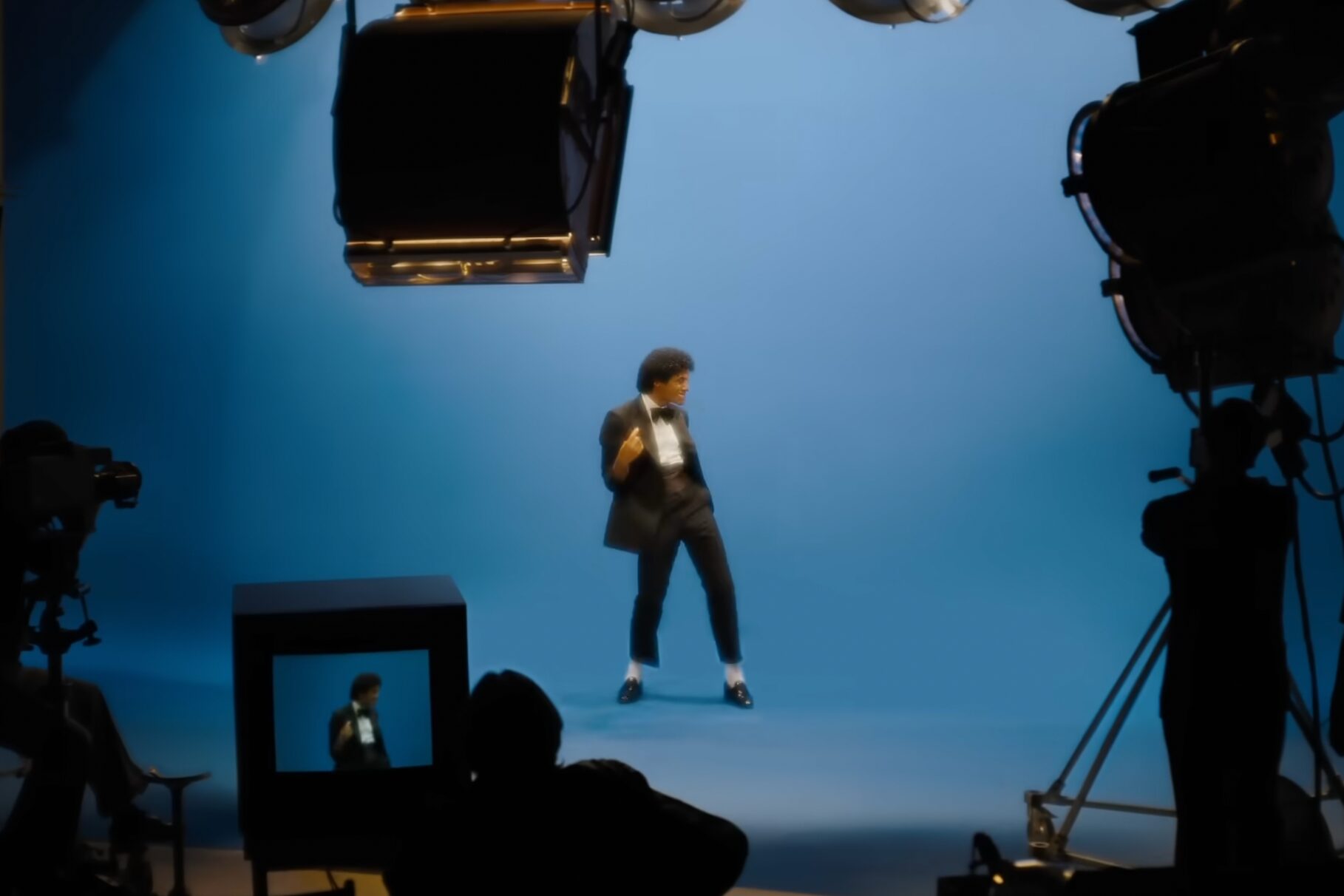
The film prides itself on meticulous recreation: the glove, the hat, the moonwalk. The lead actor captures the mannerisms — the lean, the crouch, the staccato vocal tics. But mimicry is not understanding. Watching him perform Billie Jean on a recreated Motown 25 stage is impressive as a technical feat, but it evokes no awe, no cultural weight. Because the film never explains why that moment mattered.
It’s like showing someone a photograph of a wildfire without describing the heat, the smoke, the sound of trees cracking. The movie gives us the spark but none of the fire. We see Jackson rehearse for hours, but we don’t feel the obsession. We see him write songs, but we don’t hear the creative struggle. These aren’t omissions — they’re systemic failures to dramatize what made Jackson tick.
Avoiding the Darkness Makes the Light Meaningless
Jackson’s life was a study in duality: child and man, innocent and enigmatic, beloved and feared. His music often grappled with trauma disguised as fantasy — Leaving Home, Childhood, Stranger in Moscow. A worthy biopic would treat these songs not as set pieces, but as windows into his psyche.
Instead, the film treats his darker themes as aesthetic choices. Thriller is staged as a spectacle, not a metaphor for internal horror. Smooth Criminal becomes a dance number, stripped of its predatory undertones. The result? A man who sings about pain but never seems to have felt it.
This whitewashing does a disservice to audiences and to Jackson himself. You can’t celebrate the magic without acknowledging the cost. His art was born from fracture. To present him as a flawless performer is to misunderstand his artistry entirely.
Cultural Context Is Glossed Over for Nostalgia
The movie operates in a vacuum. It shows Jackson breaking racial barriers on MTV, but doesn’t explore what that meant in 1983 — how Billie Jean’s video insertion was a quiet revolution. It includes the Pepsi commercial burn but treats it as a physical injury, not a turning point toward dependence on painkillers and the beginning of his physical transformation.
There’s no discussion of how fame warped his perception of reality. No moment where he questions his appearance, his relationships, his role as a father figure to children. The Neverland sequences are brief, superficial — just shots of Ferris wheels and animatronics, devoid of the unease that should accompany them.
Compare this to The Last Dance, which used Michael Jordan’s triumphs to explore ego, rivalry, and sacrifice. That series didn’t just show greatness — it dissected it. The Jackson film refuses dissection. It wants applause, not introspection.
Performance Without Consequence Is Just Theater
One of the film’s most baffling choices is its timeline structure. It jumps from era to era — Off the Wall, Bad, Dangerous — but never connects them thematically. There’s no arc, no evolution, no fall or redemption. Jackson emerges unchanged, unscarred, floating above his life like a ghost.
In one scene, he’s told he’s the biggest star in the world. In the next, he’s privately lonely. But we never see the loneliness manifest. He doesn’t write a song from it, fight with his brothers over it, or break down under it. It’s stated, not shown. And in cinema, what’s not shown might as well not exist.
This is a fundamental error in biopic craft. Greatness without struggle feels unearned. Pain without expression feels dishonest. The film treats Jackson’s life like a highlight reel — which might work for a tribute concert, but not for a narrative film claiming to tell his story.
What a Better Biopic Would Have Done

Imagine a film that opens not with a performance, but with Jackson alone in a hotel room, staring at his reflection, touching his nose. A film that dramatizes the 1993 allegations not to condemn or exonerate, but to show how they shattered his sense of self. One that explores his relationship with his father — not through flashbacks of abuse, but through the way he both replicated and rebelled against Joe Jackson’s control.
A truly bold biopic might have used unreliable narration — showing Jackson’s version of events, then undercutting it with quiet glances from staff, letters from accusers, or news footage. It could have embraced ambiguity. Not every question needs an answer, but it needs to be asked.
Even commercially successful biopics like Rocketman managed this balance. Elton John’s struggles with addiction, sexuality, and family were woven into the fantasy sequences. Songs weren’t just played — they were felt. The Michael Jackson movie doesn’t even try.
The Cost of Protecting a Legacy
There’s an argument, often made by fans, that Jackson’s art should be separated from his life. That focusing on allegations distracts from his contributions. But art and life are never truly separate — especially when the art is so deeply personal.
By avoiding controversy, the film doesn’t protect Jackson’s legacy. It hollows it out. It turns him into a monument, not a man. And monuments are cold. They don’t inspire — they intimidate.
Future generations will watch this film and wonder: Why was he so important? They’ll see the moves, the music, the fame — but they won’t understand the why. They won’t feel the cultural earthquake of Thriller, the defiance in Black or White, the vulnerability in She’s Out of My Life. Because the film never makes them matter.
Conclusion: A Biopic That Dances Around the Truth
The Michael Jackson movie fails at the basic duty of a biopic because it refuses to do the hard work. It celebrates the surface without scraping beneath it. It honors the icon but ignores the human.
A great biopic doesn’t have to be definitive. It doesn’t have to take sides. But it must be honest. It must show the scars behind the smile, the fear behind the fame, the cost behind the creation. This film doesn’t. It’s a tribute act wearing a $100 million budget.
If you want to understand Michael Jackson, watch the documentaries. Study the interviews. Listen to the lyrics. This movie won’t help you. It’s not a portrait — it’s a mirror, reflecting only what we already know, polished to a glossy, soulless shine.
For filmmakers daring to tell the stories of complex icons, the lesson is clear: reverence without reckoning is not art. It’s evasion.
Frequently Asked Questions
Why is the Michael Jackson movie criticized so heavily? Because it avoids exploring Jackson’s emotional depth, personal struggles, and controversies, reducing his life to a series of performances without context or consequence.
Does the movie address the abuse allegations? No, the film largely ignores the allegations against Jackson, a major oversight that undermines its credibility as a serious biopic.
Is the lead actor’s performance good? The actor convincingly mimics Jackson’s mannerisms and dance moves, but the script gives him no emotional depth to work with, limiting the performance to imitation.
How does this biopic compare to other music biopics? Unlike films like Ray or Rocketman, which confront their subjects’ flaws and traumas, this movie sanitizes Jackson’s life, making it feel shallow and evasive.
Could a fair biopic of Michael Jackson ever be made? Yes, but it would require embracing ambiguity, exploring both his artistry and his controversies, and presenting him as a complex, flawed human — not a myth.
What should a Michael Jackson biopic have focused on? It should have examined his childhood trauma, creative process, racial impact, physical transformation, and the allegations — not just his hits and dance moves.
Is the movie worth watching for fans? Only if you want a visual greatest hits package. For insight into Jackson’s life or mind, it offers little of value.
FAQ
What should you look for in The Michael Jackson Movie Fails at the Basic Duty of a Biopic? Focus on relevance, practical value, and how well the solution matches real user intent.
Is The Michael Jackson Movie Fails at the Basic Duty of a Biopic suitable for beginners? That depends on the workflow, but a clear step-by-step approach usually makes it easier to start.
How do you compare options around The Michael Jackson Movie Fails at the Basic Duty of a Biopic? Compare features, trust signals, limitations, pricing, and ease of implementation.
What mistakes should you avoid? Avoid generic choices, weak validation, and decisions based only on marketing claims.
What is the next best step? Shortlist the most relevant options, validate them quickly, and refine from real-world results.